
Do You Have to Be Gifted Your First Tarot Deck? No, Here Is Why
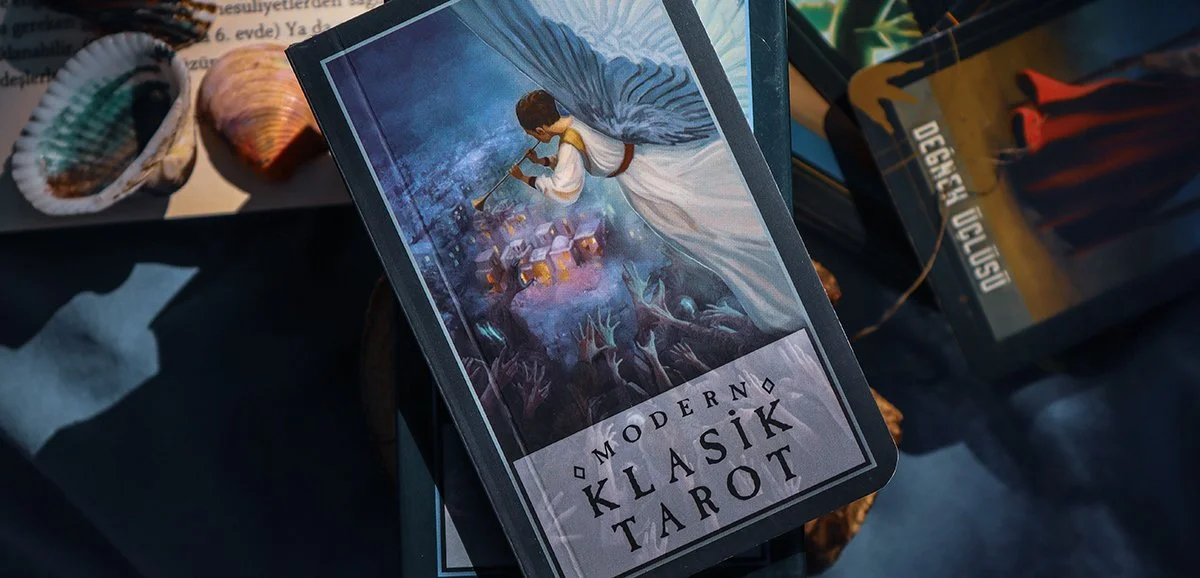
There is an old piece of advice that floats around, usually said with a knowing smile: your first deck has to be given to you. Buy one yourself and the magic supposedly will not take. We want to put that one to rest, because it keeps good people practicing they are clearly ready for.
You do not need to be gifted your tarot deck. There is no rule, no tradition, and no spiritual penalty for walking up to a deck that speaks to you and bringing it home. If anything, choosing your own cards is its own small ceremony. You are paying attention. You are listening for the one that calls to you. That is exactly the kind of attention tarot asks of you anyway.
So if a deck is tugging at you, that is your answer. Get the one that speaks to you. There are so many lovely and meaningful tarot decks.
Where to actually start
If this is your very first deck, start with a traditional Rider-Waite-Smith deck or a deck that follows its imagery closely.
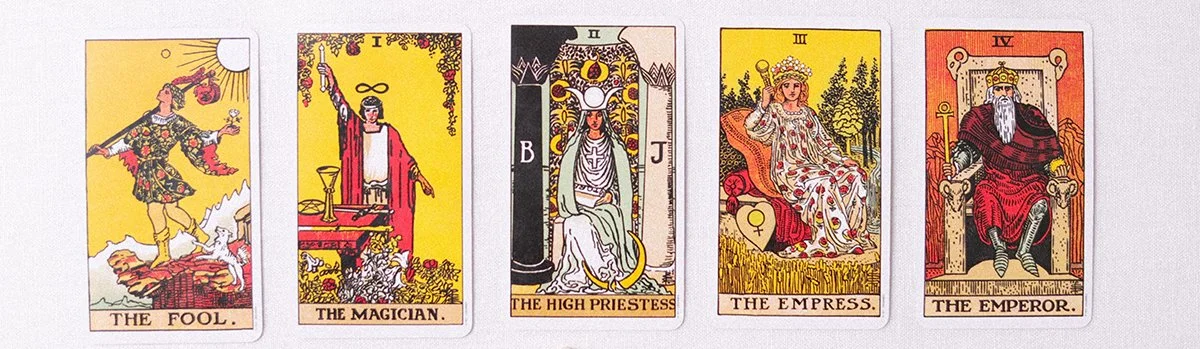
I know the fantasy decks are gorgeous, but the Rider-Waite system is the visual language that almost every other deck is built on. The symbols, the scenes, the little details tucked into each card all carry meaning, and once you learn to read them in their original form; you can pick up nearly any deck and understand what you are looking at.
Learn the symbols first: the Three of Swords and its pierced heart or the Eight of Cups walking away under a clouded moon. When you study these images in the deck they came from, you are not memorizing a book. You are training your eye to notice and that skill travels with you for the rest of your practice.
Think of it like learning to cook from a few solid base recipes before you start improvising. The structure gives you something to stand on. The creativity comes later, and it comes easier.
What to look for when you buy
Once you are ready to choose, pay attention to four things.
Card quality. You will be shuffling these cards constantly, so the stock matters. Look for a sturdy cardstock with a finish that feels good in your hands. Cards that are too thin curl and wear out fast.
A guidebook. Especially for your first deck, you want one that comes with a guide that explains each card and offers a few simple spreads. It becomes your training wheels for the first few months.
Traditional structure. A full tarot deck is 78 cards. That breaks down into 22 Major Arcana cards for the big life themes and 56 Minor Arcana cards across the four suits of Wands, Cups, Swords, and Pentacles, each running Ace through King. Sticking with this structure for your first deck keeps everything you learn transferable.
Personal resonance. This is the one nobody can decide for you. Sit with the product photos. Notice which deck you keep clicking back to. Your gut already knows.
Tarot or Oracle, which one
People ask me this all the time, so quickly: tarot follows that fixed 78-card system with meanings that have been refined for centuries: good for layered, detailed readings. Oracle decks are free-form. Every oracle deck sets its own number of cards and its own themes which makes them flexible and friendly but less structured.
For learning, start with tarot. The structure is the whole point at the beginning. Plenty of readers, ourselves included, end up with both, and reach for one or the other depending on the question in front of them.
The short version
You do not need permission and you do not need to be gifted your first deck. If a deck is speaking to you, it is allowed to come home with you.
Start with Rider-Waite-Smith. Learn the symbols where they were born. Let the beautiful collector decks be the reward you grow into, not the place you begin.
And when you are holding that first deck, shuffling it for the first time, trust the same instinct that drew you to it. That instinct is the reader in you, already awake.